Designing a Scalable SLA Framework in Salesforce Service Cloud
Designing a Scalable SLA Framework in Salesforce Service Cloud
As service organizations grow, managing customer expectations becomes increasingly complex. Many Salesforce Service Cloud implementations struggle not because features are missing, but because core service components; case assignment, SLA milestones, and escalations are implemented in isolation. The result is delayed responses, inconsistent prioritization, and SLA breaches that could have been prevented.
A well-architected SLA framework in Salesforce Service Cloud brings these components together into a unified, intelligent system that routes cases correctly, tracks service commitments accurately, and escalates issues proactively without heavy customization.
The Business Challenge: Fragmented Service Operations
Most service teams face similar challenges. Incoming cases arrive through multiple channels but are assigned inconsistently. SLAs are configured, yet agents are unaware when deadlines are approaching. Escalations happen manually or too late, often after customer dissatisfaction has already escalated. Over time, service managers lose trust in SLA reports, and teams compensate with manual tracking or external tools.
These challenges are rarely caused by platform limitations. Instead, they stem from disconnected configuration choices that fail to leverage Salesforce Service Cloud as a complete service orchestration platform.
Step 1: Intelligent Case Assignment as the Foundation
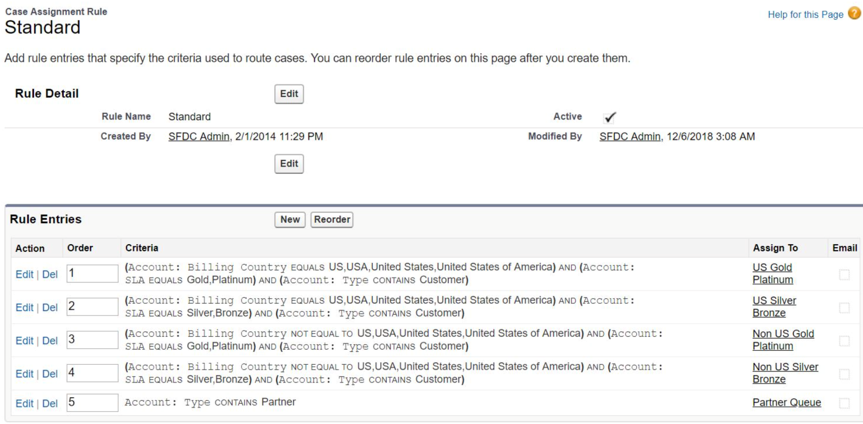
A successful SLA implementation starts with accurate case assignment. Salesforce Case Assignment Rules ensure that cases are routed to the right queues or agents based on criteria such as case origin, product, customer tier, or issue type. When cases are correctly assigned from the moment they are created, SLA clocks begin in the right context and ownership is immediately clear.
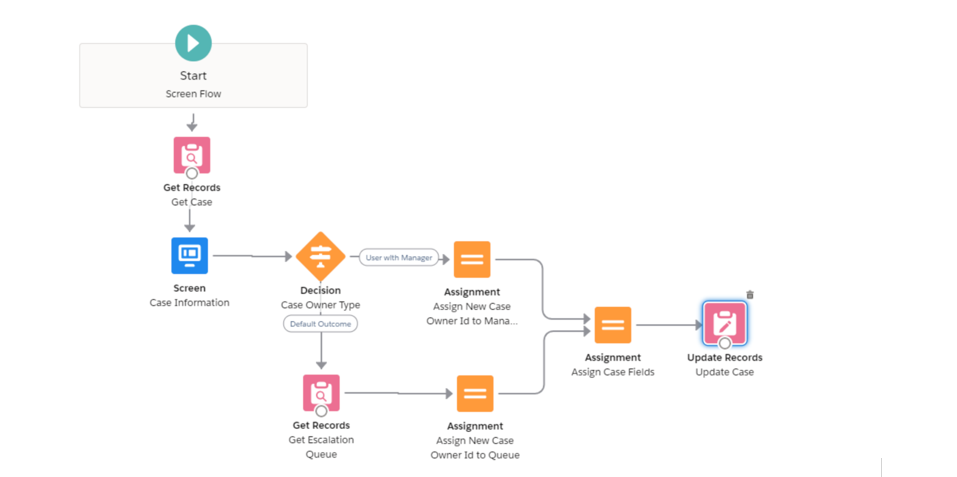
Modern implementations increasingly complement assignment rules with Flow-based logic, enabling dynamic routing that adapts as business rules evolve—without relying on hardcoded logic or Apex.
Step 2: SLA Tracking with Entitlements and Milestones
Once ownership is established, Entitlement Processes and Milestones define the service commitments that matter. Milestones track critical service events such as first response or resolution time, aligned with Business Hours and Holiday Calendars to ensure accuracy. Proper milestone configuration prevents false SLA breaches caused by off-hours or non-working days, which is a common issue in poorly designed implementations.
This approach allows service leaders to measure performance based on real operational time rather than theoretical clock hours, restoring confidence in SLA metrics.
Step 3: Proactive SLA Management with Milestone Warning Actions
Tracking SLAs alone is not enough. Salesforce Milestone Warning Actions enable proactive management by alerting agents and supervisors before a breach occurs. Instead of discovering violations after the fact, teams receive early warnings as SLA consumption reaches defined thresholds.
When combined with Salesforce Flow, these warnings can trigger intelligent actions such as priority updates, supervisor notifications, or automated reassignment ensuring SLA risks are addressed while there is still time to act.
Step 4: Automated Escalation Rules for High-Risk Cases
Escalation Rules provide an additional safety net for critical cases that remain unresolved. Based on time-based criteria, Salesforce can automatically escalate cases by updating priority or reassigning ownership. When escalation rules are aligned with milestone warnings, organizations achieve a layered escalation strategy that balances automation with human intervention.
This ensures that no high-impact case goes unnoticed, even during peak volumes or staffing constraints.
The Business Outcome
By implementing case assignment rules, SLA milestones, milestone warning actions, and escalation rules as a unified framework, Salesforce Service Cloud becomes a proactive service management platform. Agents know what to work on and when managers gain confidence in SLA reporting, and customers experience faster, more reliable support.
Most importantly, this approach delivers enterprise-grade service outcomes using Salesforce’s out-of-the-box capabilities minimizing technical debt while maximizing long-term scalability.
Conclusion
A successful SLA implementation in Salesforce Service Cloud is not about isolated configurations; it is about orchestration. When assignment, tracking, warnings, and escalations work together, SLAs shift from being reactive to proactive service commitments. Organizations that invest in this holistic approach consistently outperform those that treat SLAs as simple timers.