
Why Salesforce? A Business Case on the Evolution of Salesforce Over the Years
1. Executive Summary
What once started as just another cloud CRM now leads the way in artificial intelligence for customers worldwide. Because businesses need reliable tools, they turn to Salesforce; this report shows why. Over time, changes in how people work, what tech makes possible, and what buyers expect shaped its path forward. Experience matters more today; smart systems help shape it. Growth here doesn’t come from copying trends;it comes from matching real needs.
2. The Theory: Why Salesforce Exists
At its core, Salesforce is built on three foundational theories:
“No Software” Philosophy
Introduced in 1999, Salesforce challenged traditional on-premise software. The idea: software should be delivered over the internet, with no local installation, maintenance, or upgrade burden. This reduced IT cost, complexity, and time-to-value.
Customer-Centric Business Model
Salesforce believed customer data should live in one unified platform. Sales, service, marketing, and later commerce should all work from a single source of truth.
3. Evolution of Salesforce: Key Phases
Phase 1: Cloud CRM Pioneer (1999–2005)
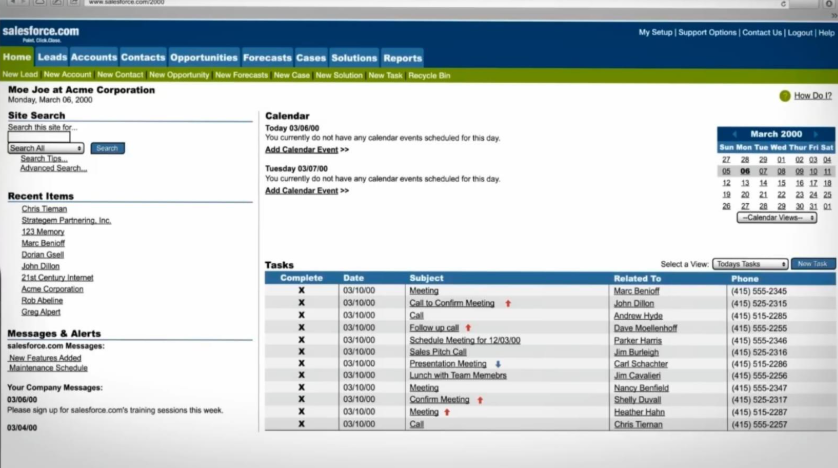
During this period, the CRM market was dominated by expensive, on-premise solutions that were slow to deploy and heavily dependent on IT infrastructure. Salesforce disrupted this model by introducing Sales Cloud, enabling organizations to manage Leads, Accounts, and Opportunities entirely in the cloud. The business impact was significant;sales teams experienced faster sales cycles, companies benefited from lower initial costs, and CRM adoption expanded beyond large enterprises to include small and mid-size businesses, effectively democratizing customer relationship management.
Phase 2: Platform & Customization Era (2006–2010)
As customer needs became more complex, Salesforce evolved beyond standard CRM functionality by launching the Force.com platform. This era introduced powerful customization capabilities such as Custom Objects, Workflows, Apex, and Visualforce. This shift was critical because Salesforce was no longer viewed as just a CRM application; it became a full-fledged enterprise application platform.
Phase 3: Multi-Cloud Expansion (2011–2015)
Salesforce expanded its vision from sales automation to complete customer experience management by introducing multiple cloud offerings, including Service Cloud, Marketing Cloud through the ExactTarget acquisition, and Community Cloud (now Experience Cloud).
Phase 4: Ecosystem & Industry Focus (2016–2019)
During this phase, Salesforce strengthened its ecosystem through the rapid growth of AppExchange, the launch of Industry Clouds for sectors such as Financial Services, Healthcare, and Manufacturing, and the introduction of Lightning Experience, a modern and intuitive user interface. Businesses benefited from scalable, compliant solutions with lower customization costs and faster time-to-value.
Phase 5: Data, Integration & AI (2020–2022)
Recognizing that modern CRM success depends on data intelligence, Salesforce expanded its capabilities through strategic acquisitions such as MuleSoft for integration, Tableau for analytics, and Einstein AI for predictive insights. This marked a theory shift where CRM was no longer just about managing relationships but about harnessing data across the enterprise.
Phase 6: AI-First & Autonomous CRM (2023–Present)
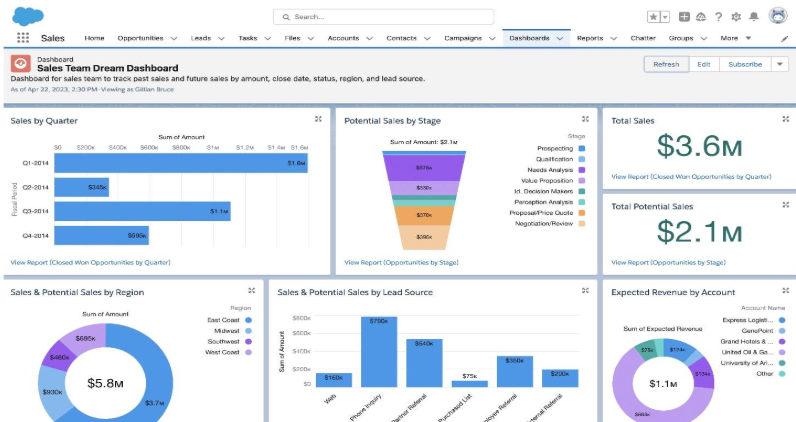
In its most recent evolution, Salesforce has embraced an AI-first strategy with innovations such as Einstein GPT, Agent force and autonomous agents, and Data Cloud for real-time customer profiles. The platform is transitioning from traditional systems of record to intelligent systems of action, where AI not only provides insights but also executes decisions.
4. Why Businesses Choose Salesforce ?
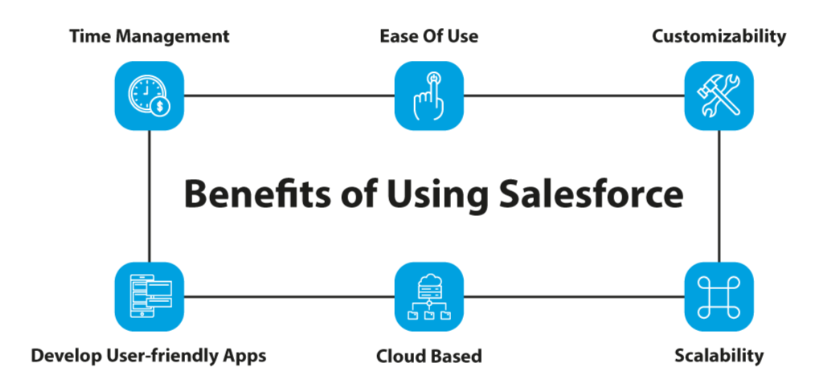
Scalability: Salesforce is designed to scale seamlessly as organizations grow, making it suitable for both startups and global enterprises.This scalability ensures long-term stability and eliminates the need for costly system replacements as business demands evolve.
Speed and Agility: Salesforce empowers organizations to respond quickly to market changes through its low-code and no-code capabilities. Tools such as declarative automation, flows, and configurable components allow businesses to deploy new features, automate processes, and iterate rapidly without heavy development effort. This agility significantly reduces time-to-market and supports continuous innovation.
Innovation Trust: With three major releases each year, Salesforce delivers continuous innovation without disrupting business operations. At the same time, the platform places a strong emphasis on security, compliance, and reliability through its Trust Layer, ensuring data protection and regulatory adherence.
5. Conclusion
Not by chance did Salesforce succeed —it grew through careful thought guiding each step. Using cloud power, a user-focused layout, and expandable architecture, along with artificial intelligence, the company shifted from being just another CRM to becoming a vital digital backbone for today’s businesses.
In short:
What makes Salesforce stand out is how it grows alongside businesses, ahead of their needs instead of behind.
Final Thought
Salesforce is no longer just a CRM.
It’s a system of action—where data, AI, and automation work together to drive growth.
The real question isn’t “Why Salesforce?”
It’s “Is your business ready for the kind of evolution Salesforce represents?”

