

Business Case: Salesforce sprint 26 release key point.
Executive Summary
What stands out in Salesforce’s Spring ’26 drop is how it pushes firms toward AI-driven customer management without forcing it. Agent force gets more intuitive, Einstein smarter, while confidence in data accuracy climbs. Developers find fewer hurdles when building apps. Companies might save money on daily operations while selling more effectively. Personal touches become easier to roll out across large user groups.
Most companies already running Salesforce care less about added tools, more on how Spring ’26 reshapes work with smart automation, tighter control, and deeper machine learning.
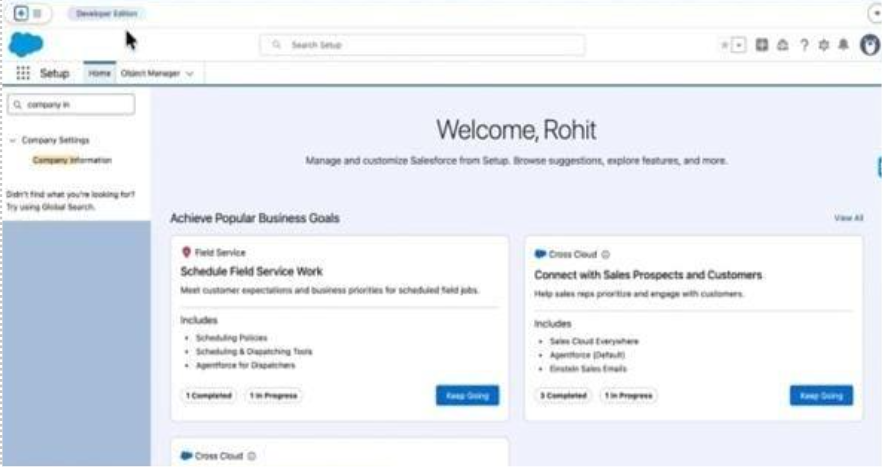
1: Salesforce Setup Home – Admin Dashboard
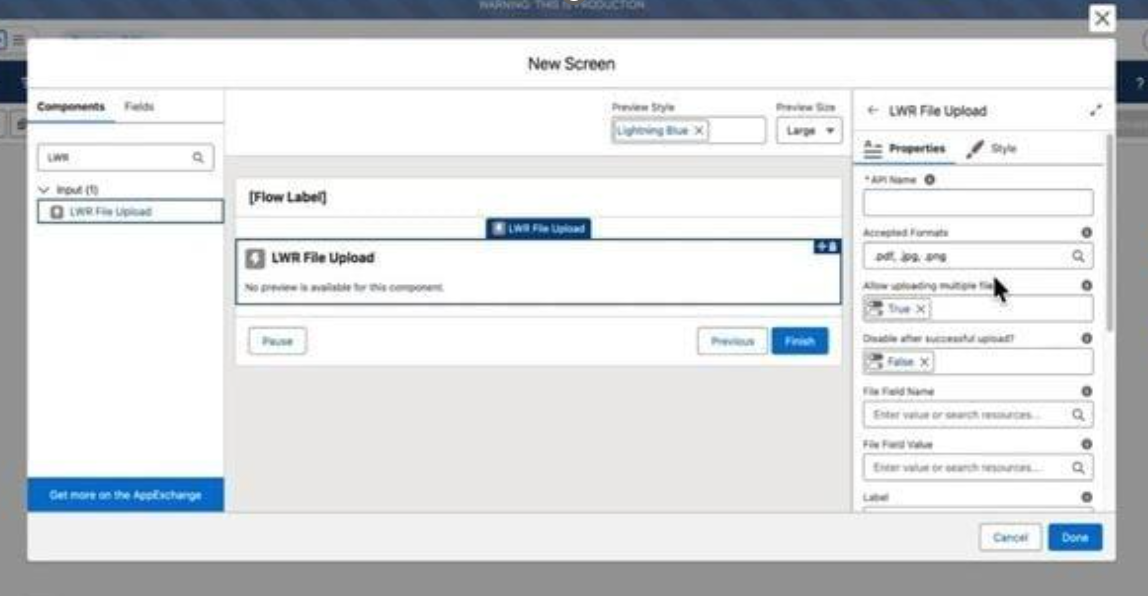
Slide 2: Screen Flow – LWC File Upload Component
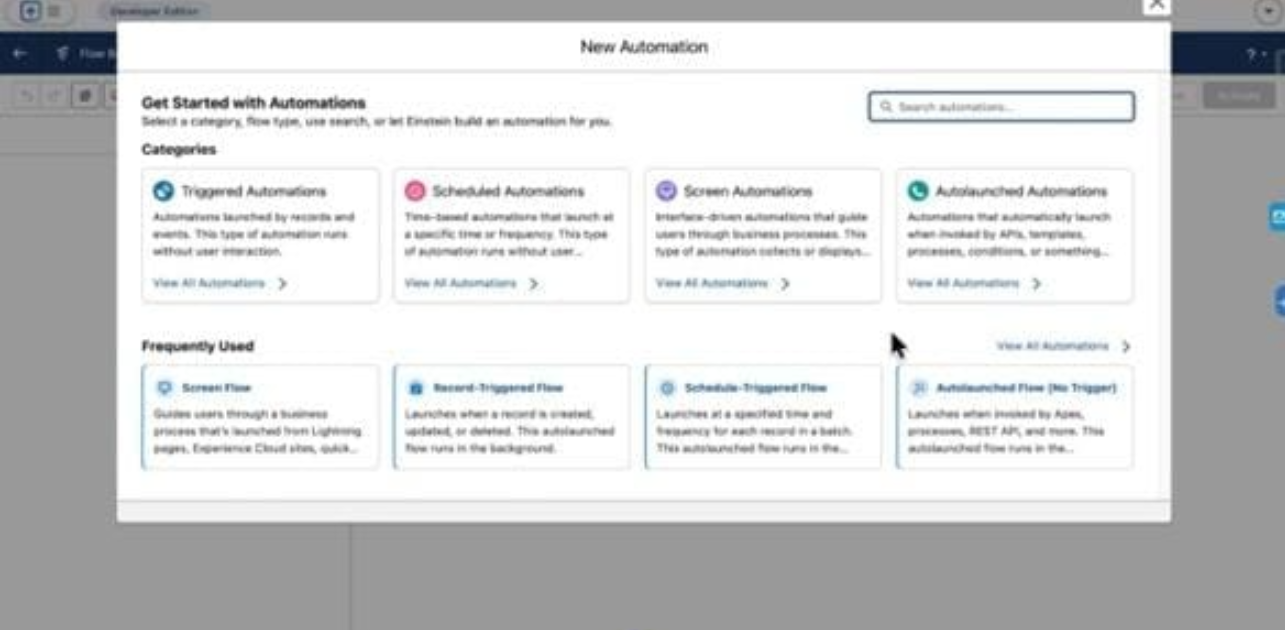
Slide 3: New Automation – Flow Builder (Automation Types)
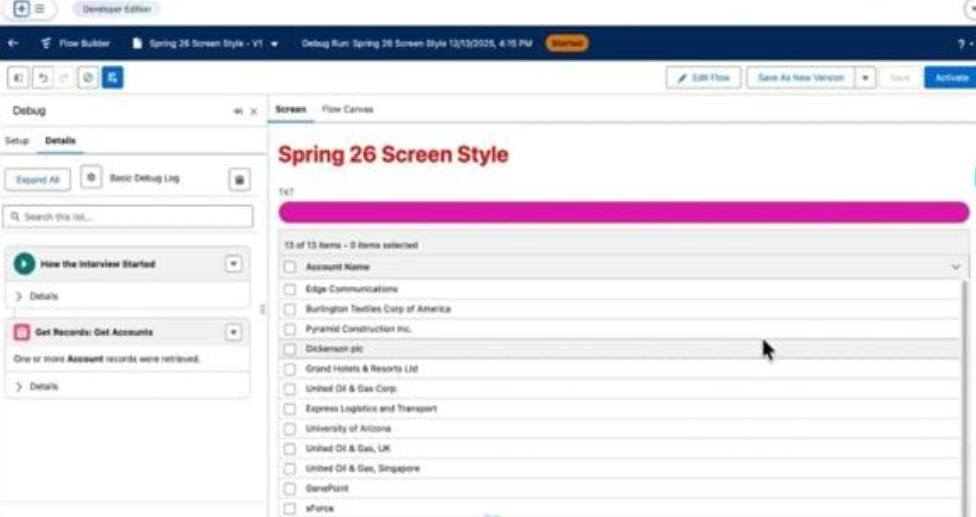
Slide 3: Spring ’26 Screen Style – Enhanced UI
Business Challenges Addressed
| Business Problem | Impact |
| Manual processes & agent overload | Slower case resolution, higher costs |
| Fragmented customer data | Poor personalization |
| AI trust & compliance risks | Low AI adoption |
| Slow app customization | Delayed innovation |
| Sales productivity gaps | Missed revenue |
Key Spring ’26 Major Changes (Business-Relevant)
- 1.AgentforceEnhancements (AI Agents at Scale)
Spring ’26 significantly advances Agentforce by introducing smarter autonomous AI agents with stronger reasoning capabilities and the ability to execute multi-step tasks across Sales, Service, and Marketing workflows. These agents can now operate with improved human-in-the-loop controls, ensuring oversight without slowing automation. From a business perspective, this translates into a 30–40% reduction in agent workload, faster case resolution, and the ability to provide always-on customer support driving operational efficiency while maintaining service quality. - Einstein Copilot – More Context, More Control
Einstein Copilot now delivers deeper CRM context awareness, allowing AI responses to be moreaccurate and relevant to real business scenarios. Admins gain stronger governance controls over AI outputs, along with the ability to create custom Copilot actions using low-code tools rather than heavy development. The business impact is increased trust in AI adoption, reduced user training time, and consistent, compliant AI-driven interactions across the organization. - Data Cloud + Zero Copy Expansion
Salesforce Spring ’26 enhances Data Cloud with faster real-time data unification, expanded Zero Copy integrations, and improved identity resolution across systems. Organizations can now access and activate data where it lives, without unnecessary replication. This enables a truesingle source of truth, supports real-time personalization at scale, and significantly lowers data movement and storage costs especially critical for enterprises managing large data volumes. - Sales Cloud Productivity Boost
Sales Cloud introduces AI-generated opportunity insights, improved forecast accuracy, and smart follow-up recommendations that guide reps toward the most impactful actions. These enhancements help sales teams focus on selling rather than administrative tasks. From a business standpoint, companiesbenefit from higher win rates, more reliable revenue forecasting, and increased sales productivity with less manual effort. - Service Cloud & Digital Engagement
Service Cloud now offers AI-assisted case summaries, intelligent omnichannel routing, and automated knowledge article suggestions. These capabilities ensure that agents receive the right context at the right time and that customers are routed to the most suitable support channel. The result is faster first-contact resolution, improved customer satisfaction (CSAT), and a measurable reduction in escalations. - Developer & Admin Experience
Spring ’26 improves the developer and admin experience through faster Flow execution, enhanced debugging and monitoring tools, and low-code AI configuration options. Teams can build, test, and deploy solutions more quickly while reducing reliance on custom code. This leads to faster release cycles, lower maintenance costs, and greater agility in responding to changing business needs. - Security, Compliance & Trust
Security and trust are further strengthened with enhanced Salesforce Shield capabilities, AI audit trails, and more granular permission and access controls. These updates provide transparency into AI decisions and ensure compliance with regulatory requirements. For businesses, this delivers enterprise-grade AI trust, reduced security risk, and confidence in scaling AI across mission-critical processes.
Conclusion
Salesforce Spring ’26 is a business-enabler release, not just a platform update. Organizations that adopt AI agents, trusted Copilot experiences, and real-time data will gain a clear competitive advantage in 2026.

