Why Companies Are Moving to Salesforce Revenue Cloud
Executive Summary
Organizations struggle with fragmented sales processes, manual pricing, and delayed revenue recognition. Salesforce Revenue Cloud provides an end-to-end solution that automates quoting, pricing, contract management, billing, and revenue recognition—ensuring faster deal closures and predictable revenue growth.
Business Problem
Many organizations face challenges in managing their sales and revenue processes due to heavy reliance on manual operations. Quote creation is often done manually, which leads to errors, inconsistencies, and delays in responding to customers. Complex pricing structures and discount approvals further slowdown the sales process, making it difficult for sales teams to provide accurate and timely quotes.
There is also limited visibility into contracts and renewal opportunities, which increases the risk of missed renewals and lost revenue. In addition, incorrect billing processes can result in revenue leakage, directly impacting the organization’s profitability. Disconnected systems such as CRM, ERP, and billing platforms create data silos, reducing efficiency and making it difficult to maintain a single source of truth.
Proposed Solution: Salesforce Revenue Cloud
Salesforce Revenue Cloud provides a unified platform that connects the entire revenue lifecycle—from quoting to billing and revenue recognition. It eliminates manual processes and improves efficiency, accuracy, and visibility across sales and finance teams. Salesforce CPQ automates product configuration, pricing, and quote generation, enabling faster and error-free sales processes.
The Billing component automates invoicing, payments, and subscription billing, ensuring accurate and timely revenue collection. Revenue Recognition ensures compliance with standards like ASC 606 and IFRS 15 by automating financial tracking and reporting.
Implementation Approach
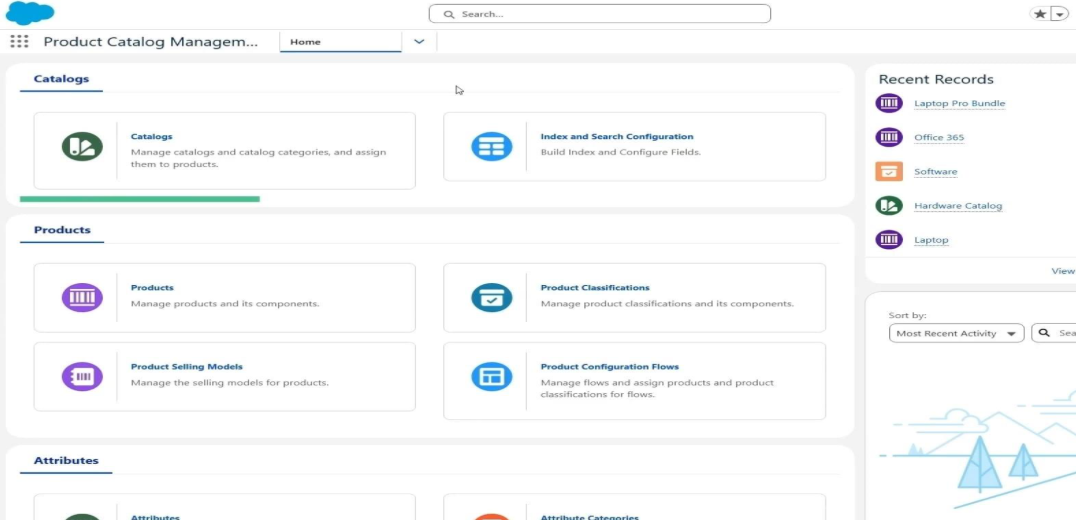
Slide 1: Product Catalog Management – Home
This is the starting point of the Revenue Cloud setup. In this screen, we manage all product-related configurations required before selling anything. The Catalogs section is used to organize products into logical groups like Hardware or Software. The Products section allows us to create individual products and define their structure.
Slide 2: Creating Bundle Product (Laptop Pro Bundle)
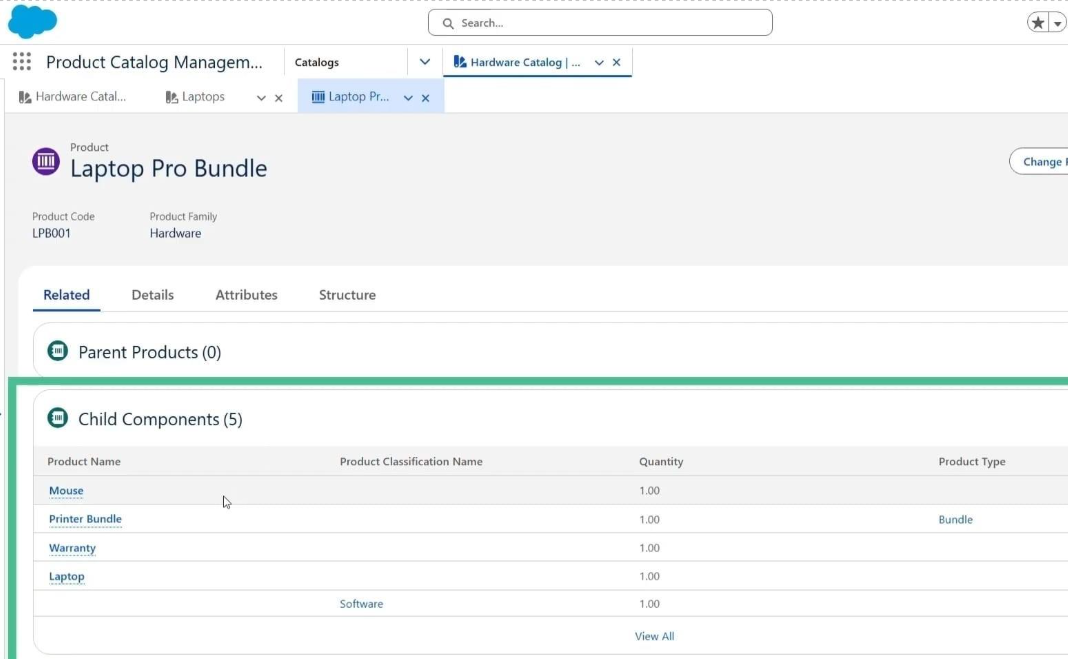
In this slide, we see a product called Laptop Pro Bundle created under the Hardware family. This is a bundle product, meaning it contains multiple child components.
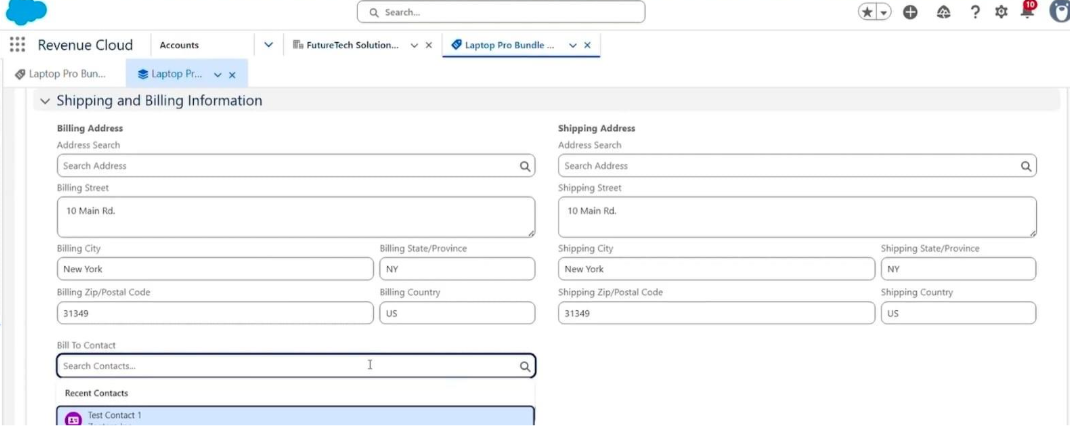
Slide 3: Account Creation – FutureTech Solutions
This slide shows the Account record for the customer FutureTech Solutions. Before creating a quote, we must have an Account.
Slide 4: Creating Quote with Quote Line Items
Here we see the Quote page under Revenue Cloud. The Quote is in Draft stage and linked to:
- Opportunity
- Account
- Products (Quote Line Items)
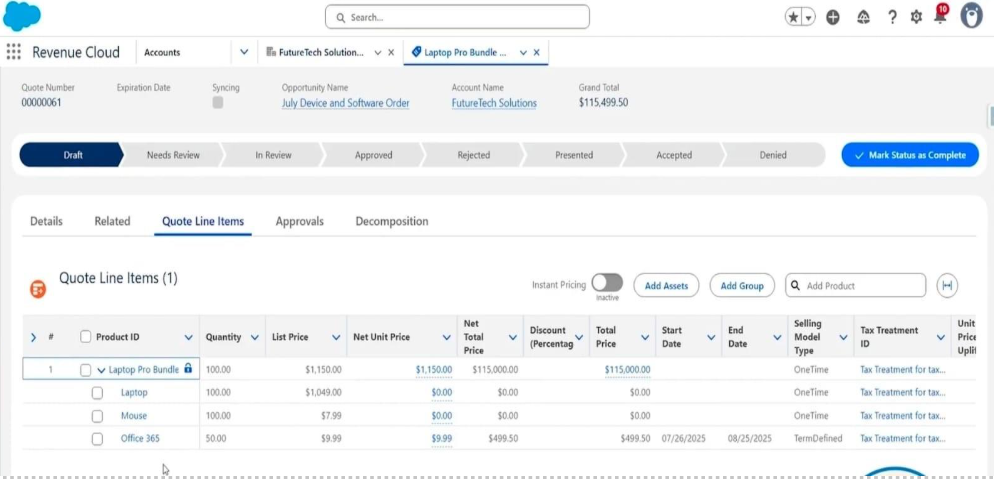
Slide 5: Quote Line Item Pricing Details
This screen shows detailed pricing breakdown:
- Net Unit Price
- Net Total Price
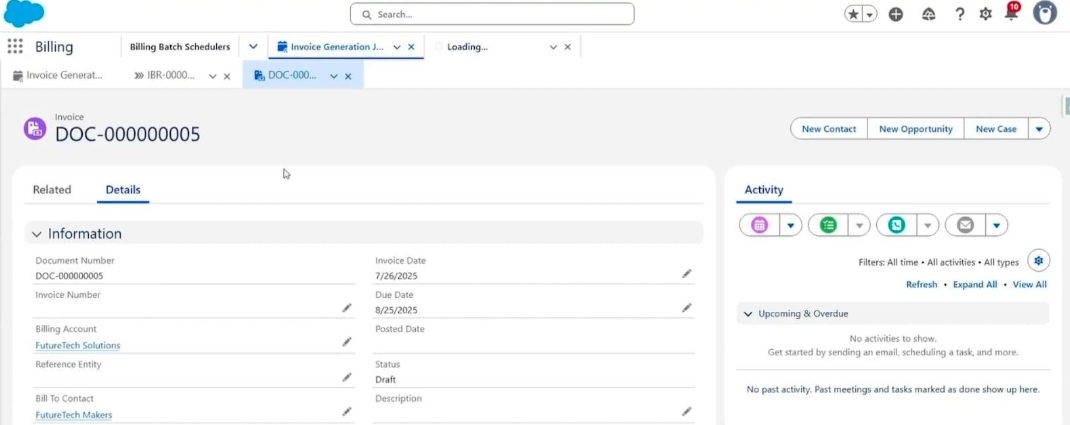
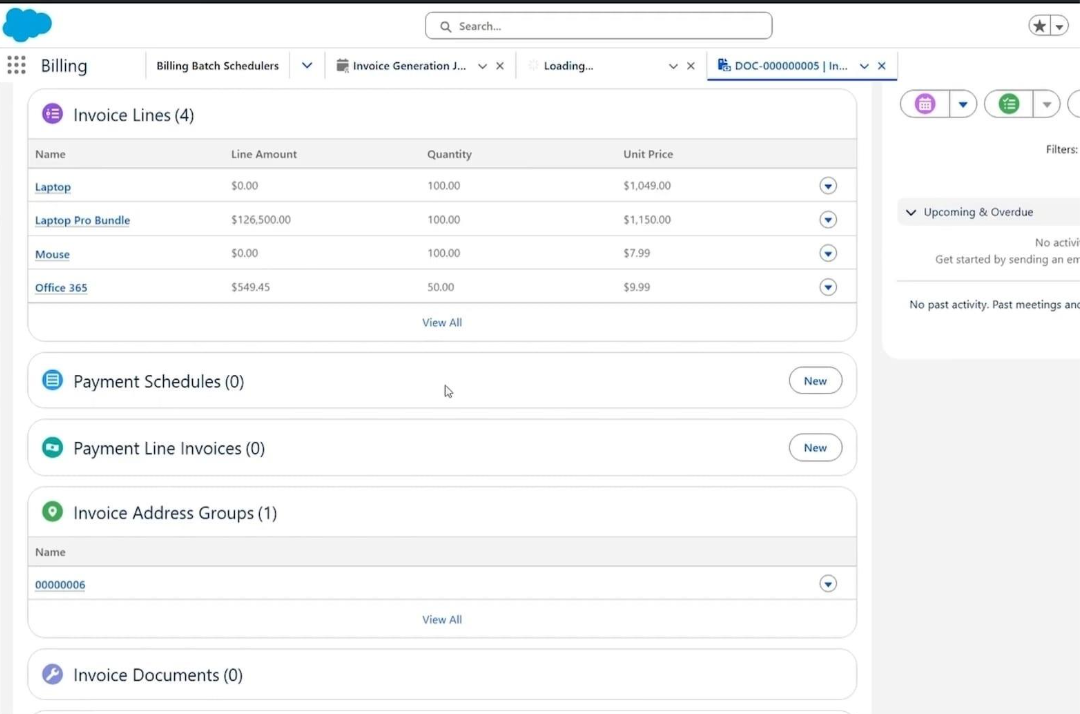
slide 6: Invoice Generation – Billing Process
After the Quote is accepted and Order is created, the billing process begins. This slide shows Invoice record .
It includes: Document Number, Invoice Date, Due Date, Billing Account, Status (Draft).
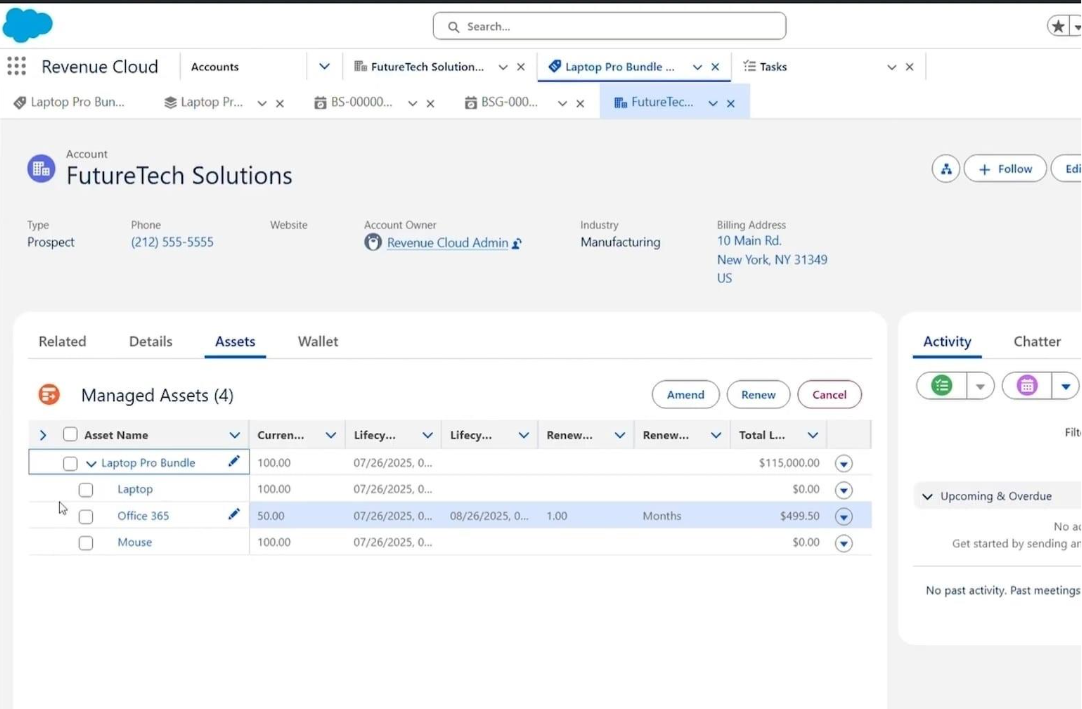
Slide 7: Asset Creation After Order Completion
This slide shows Managed Assets under the Account.
After invoice posting and order activation:
- Assets are created automatically
- Bundle components become assets
- Subscription products show lifecycle and renewal dates
 Complete Revenue Cloud Process Flow (End-to-End)
- Create ProductCatalog.
- Create Products (Bundle + Components).
- Create Account.
- Create Opportunity.
- Create Quote.
- Add Products (Quote Line Items).
- Review Pricing & Discount.
- Submit& Accept Quote.
- Create Order.
- Generate Invoice.
- Post Invoice.
- Assets Created.
- Manage Renewal / Amendment.
Conclusion
Salesforce Revenue Cloud transforms the revenue lifecycle by automating sales, billing, and financial processes. It enables organizations to close deals faster, reduce revenue leakage, and achieve predictable growth, making it a strategic investment for modern businesses.